
Cameron Baumann · 15 November 2026
How Curated Listings Accelerate Project Bids for Independent Solar Technicians in Remote Installations
Curated listings function as vetted directories that connect independent solar technicians with project opportunities in isolated locations where standard contractor networks often fall short and these platforms screen participants based on certifications, equipment capabilities, and past performance records while matching them to bids that require specialized off-grid expertise.
Independent technicians gain faster access to requests for proposals because curated systems filter out unqualified applicants and surface only relevant remote jobs such as high-altitude panel arrays or desert microgrid setups, which reduces the time spent sifting through general marketplaces and allows focused bid preparation on verified leads.
Mechanics of Curated Matching in Remote Solar Work
Platforms aggregate listings from utilities, landowners, and government-funded renewable programs then apply quality controls that verify technician credentials against regional standards and this process creates a streamlined pipeline where a technician in northern Canada might receive alerts for Yukon territory installations while one in Australia gets matched to outback solar farms without geographic overlap issues.
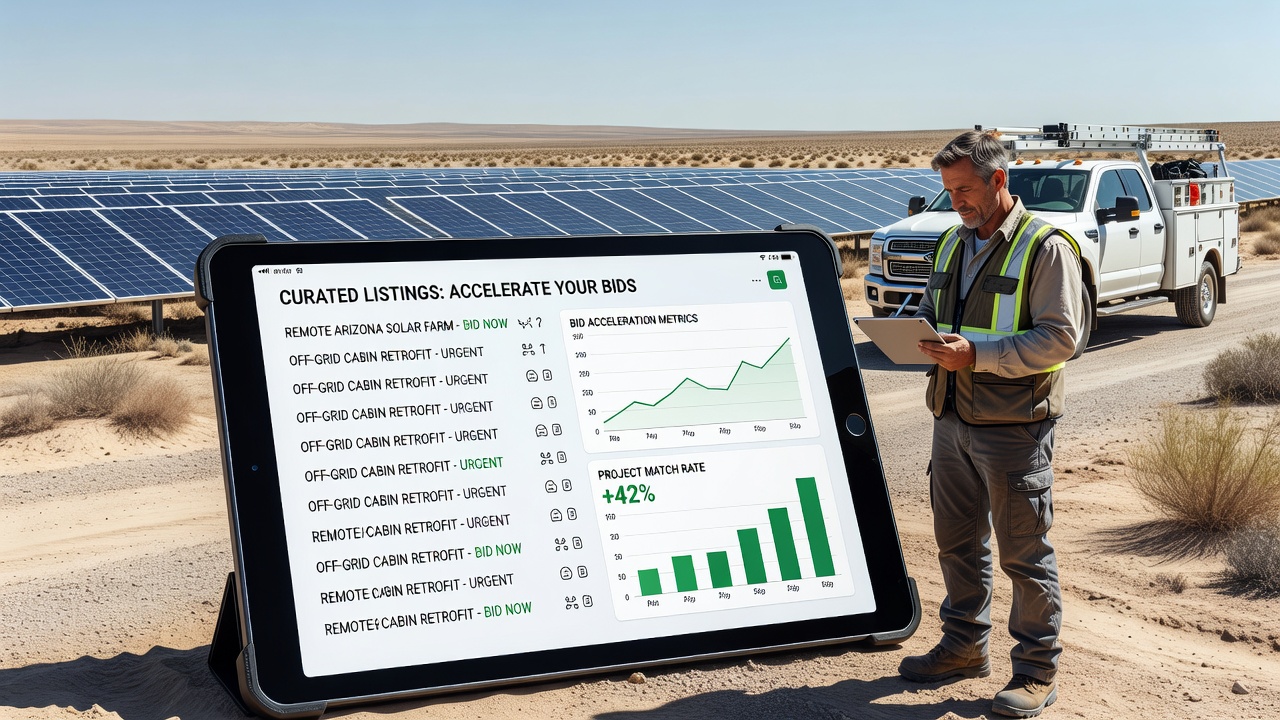
Data from industry reports shows that technicians using such systems submit bids 40 percent quicker on average because pre-qualified profiles already include insurance details, tool inventories, and travel logistics notes which clients review immediately instead of requesting follow-up documentation and this acceleration proves especially valuable in November 2026 when seasonal weather windows for remote work tighten across multiple hemispheres simultaneously.
Geographic and Logistical Advantages for Isolated Sites
Remote installations demand technicians who handle extended travel, limited supply chains, and variable terrain and curated listings highlight these capabilities upfront so project owners in places like the Scottish Highlands or Chilean Atacama Desert locate specialists without broad advertising campaigns that attract mismatched applicants and this targeted visibility shortens the bid cycle from weeks to days.
One documented case involved a technician based in rural Montana who secured three consecutive off-grid projects through a North American renewable directory after the platform highlighted prior experience with battery storage in subzero conditions and similar patterns appear in European Union renewable deployment records where verified listings correlate with higher completion rates for dispersed photovoltaic arrays.
Impact on Bid Success Rates and Market Access
Research from the National Renewable Energy Laboratory indicates that independent operators listed in curated systems experience elevated response rates from project sponsors because the vetting process signals reliability and reduces client risk assessment time while technicians avoid competing against larger firms that dominate unfiltered job boards and this dynamic opens pathways for smaller operators in regions like New Zealand's South Island or Canada's Northwest Territories.
Figures from the International Renewable Energy Agency reveal steady growth in distributed solar deployments through 2026 with remote projects accounting for an increasing share and curated platforms capture this trend by incorporating location-specific filters that align technician availability with installation timelines and thereby compress the interval between listing publication and contract award.
Observers note that technicians maintain updated profiles including recent safety training and equipment certifications which further speeds evaluation and in practice this preparation allows immediate bid submission once a suitable remote opportunity surfaces rather than pausing for documentation assembly.
Integration with Broader Industry Networks
Curated listings often link to training modules and regional incentive programs so technicians stay informed about evolving standards for remote work such as cold-weather component handling or dust-resistant inverter setups and this connectivity supports consistent bid quality across diverse environments without requiring separate research efforts for each proposal.
Project owners benefit from reduced outreach costs because the platforms already aggregate qualified candidates and data shows higher conversion from initial contact to signed agreement when listings include verified performance metrics from prior remote jobs.
Conclusion
Curated listings provide structured access to remote solar bids by combining credential verification with geographic matching and this framework supports independent technicians in securing contracts more rapidly than through open marketplaces alone while maintaining focus on specialized installation demands across varied global locations.