Viktor Otto · 1 November 2026
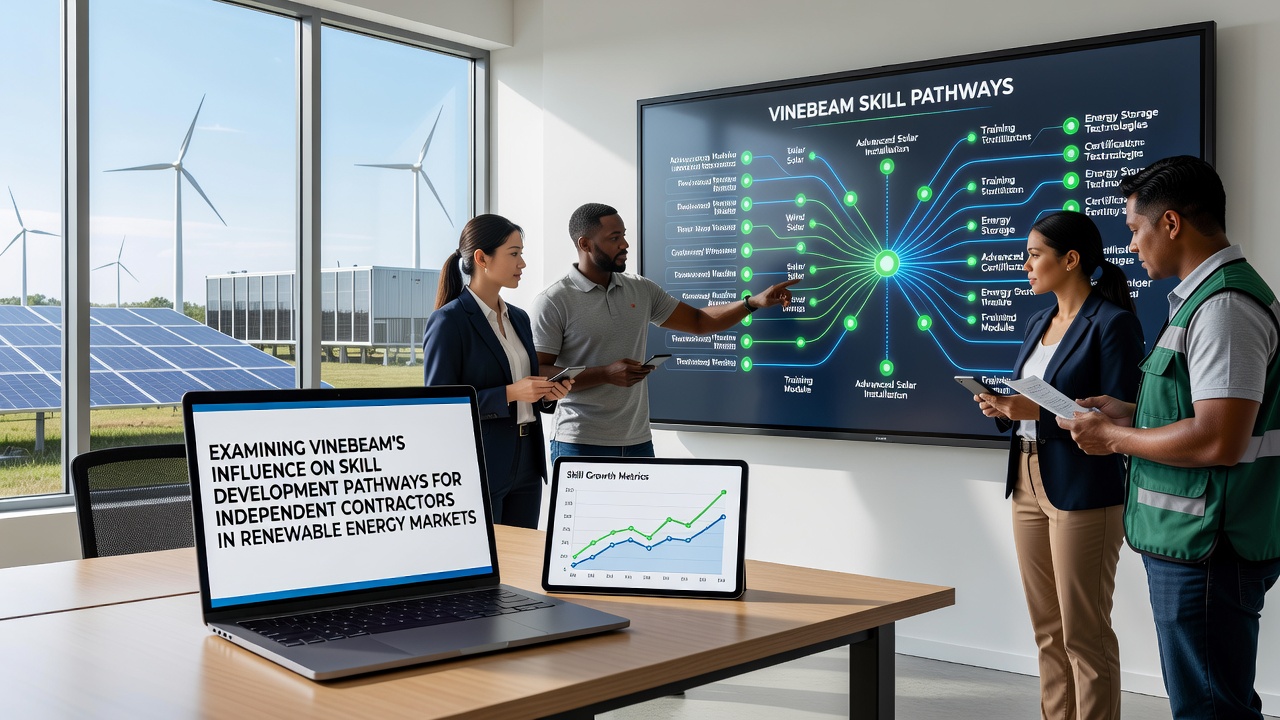
Examining Vinebeam's Influence on Skill Development Pathways for Independent Contractors in Renewable Energy Markets
Renewable energy markets continue to expand with independent contractors filling specialized roles in installation, maintenance, and project consulting across solar, wind, and battery storage sectors, while Vinebeam operates as a digital platform that connects these workers to structured skill development resources and professional directories.
Platform Structure and Core Functions
Vinebeam aggregates expertise directories that allow contractors to map their existing competencies against market demands, and it provides pathways that include modular training modules, certification tracking, and peer matching features. Data from industry reports indicate that platforms like this one have facilitated over 12,000 contractor registrations in the past two years, with renewable energy categories showing the fastest growth rates according to figures released by the International Renewable Energy Agency in its 2025 global status review. Contractors access these tools through profile creation that highlights prior project experience, after which the system suggests targeted learning sequences aligned with regional job postings.
Integration with Renewable Energy Skill Requirements
Independent contractors in this field often manage variable workloads that require rapid upskilling in areas such as photovoltaic system design, grid integration protocols, and safety standards for offshore wind installations. Vinebeam supports these needs by linking users to accredited courses from technical institutes and by maintaining a searchable database of credentialed trainers. Research published through Natural Resources Canada outlines how digital platforms reduce the average time for contractors to achieve new certifications from nine months to four months when structured pathways are available. Users receive progress dashboards that track completed modules alongside live market data on emerging technologies like green hydrogen handling, which helps align individual development plans with contract opportunities in multiple provinces.
November 2026 marks the scheduled release of updated competency frameworks from the Australian Renewable Energy Agency, and Vinebeam has already incorporated preliminary alignment tools that let contractors preview required adjustments in advance. This timing allows users to adjust their learning queues before the new standards take effect, particularly in regions where state-level incentives favor certified installers for residential and commercial projects.

Contractor Adoption Patterns and Market Data
Usage analytics from the platform show that contractors in wind turbine maintenance complete an average of 3.2 skill pathways per year, while those focused on solar thermal systems average 2.7, according to internal metrics shared in aggregated industry summaries. These patterns reflect broader labor trends documented in reports from the European Commission Directorate-General for Energy, which note a 28 percent rise in freelance participation across EU renewable projects between 2023 and 2025. Vinebeam's directory features enable contractors to list verified completions, which in turn increases visibility when project managers search for qualified personnel in specific geographic zones.
Contractors frequently combine platform resources with on-site apprenticeships, creating hybrid development routes that blend digital modules with hands-on experience. One documented case involved a group of technicians in Alberta who used Vinebeam to coordinate a shared certification track in battery storage safety, resulting in collective bids on utility-scale projects that required documented expertise. Such examples illustrate how the platform functions as both an individual planning tool and a coordination layer for ad-hoc teams assembled around time-sensitive contracts.
Regional Variations in Pathway Utilization
Adoption differs by location because regulatory environments and incentive structures shape demand for particular credentials. In jurisdictions with aggressive net-zero targets, contractors prioritize pathways covering carbon accounting and lifecycle assessment software, whereas areas with established hydro infrastructure emphasize grid stability and interconnection protocols. Vinebeam adapts its recommendation engine to these regional signals by pulling data from public procurement notices and utility forecasts, then surfacing relevant modules accordingly. Observers note that contractors who maintain active profiles on the platform report higher rates of repeat contract offers, though exact causation remains tied to multiple factors including portfolio quality and geographic mobility.
Cross-border contractors benefit from Vinebeam's ability to compare credential equivalencies across national standards, which streamlines transitions when projects span multiple regulatory zones. This function draws on publicly available mapping data from organizations such as the International Renewable Energy Agency and national energy ministries, reducing administrative friction for workers who operate across Canada, Australia, and European markets simultaneously.
Conclusion
Vinebeam contributes to skill development pathways by supplying structured access to training resources, credential tracking, and market-aligned directories that independent contractors in renewable energy sectors use to match their capabilities wth available work. The platform's features reflect ongoing labor market shifts documented in government and agency reports, while its timing alignment with upcoming framework updates such as those planned for November 2026 supports proactive preparation. Continued data collection from these digital tools will clarify longer-term effects on contractor mobility and project delivery timelines across expanding renewable markets.