Quinn Brooks · 20 September 2026
Decoding Engagement Rate Fluctuations Following Infrastructure Updates on Niche Digital Platforms
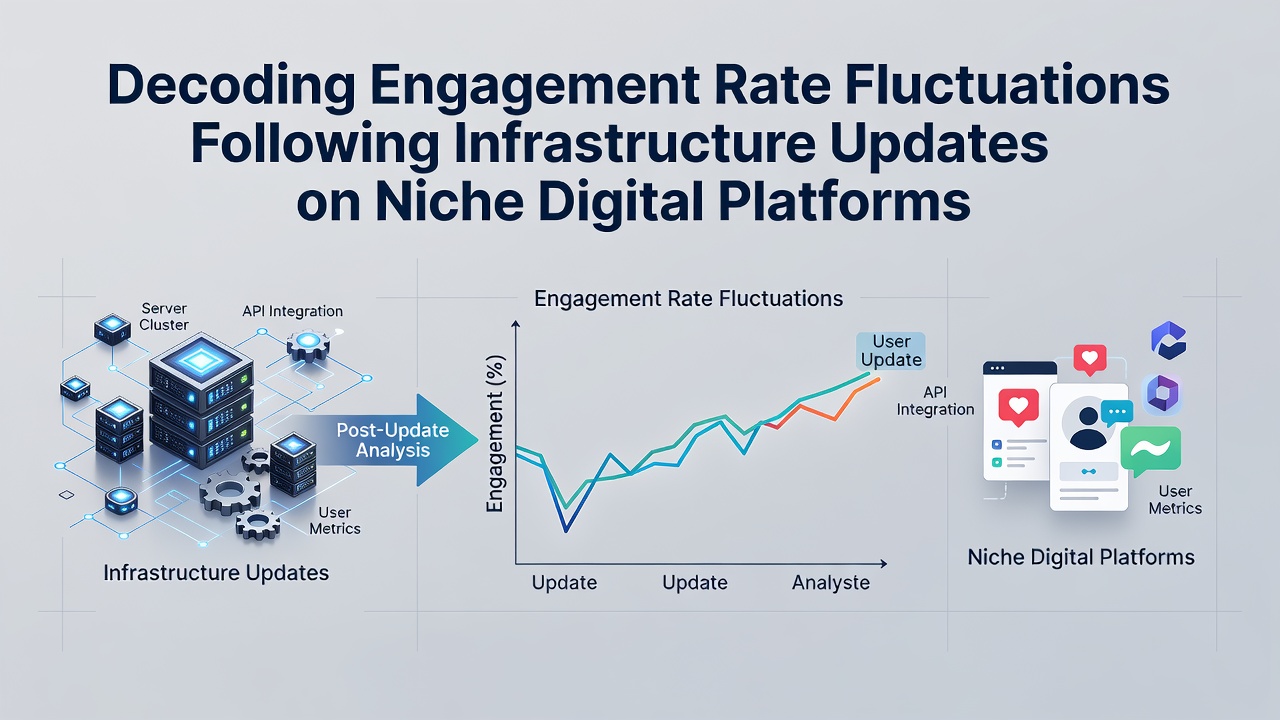
Platform operators on specialized digital services often track engagement rates as core indicators of user interaction, and these metrics can shift noticeably when infrastructure components receive updates such as server migrations, content delivery network adjustments, or backend framework revisions. Data collected across multiple niche communities reveals that response times, content delivery consistency, and session stability play direct roles in how users continue or pause their activity, while reports from September 2026 highlight several coordinated infrastructure rollouts that coincided with measurable changes in click-through patterns and dwell durations.
Core Components of Engagement Measurement
Engagement rates typically combine session length, return frequency, content interaction depth, and conversion events into composite scores, and analysts calculate these figures from server logs plus client-side tracking scripts that capture scroll behavior along with form submissions. When infrastructure teams implement changes to database indexing or caching layers, the resulting improvements in page load sequences can elevate average session times by several seconds, whereas partial rollouts sometimes create temporary inconsistencies that reduce immediate user retention across mobile and desktop endpoints alike.
Types of Infrastructure Updates and Timing Effects
Common updates include migration to new hosting regions, adoption of updated TLS protocols, and integration of edge computing nodes, each of which alters data transmission paths and influences how quickly users receive requested resources. Observers note that updates scheduled during low-traffic windows in September 2026 produced smoother transitions on several specialized forums, yet the same modifications executed without sufficient pre-testing led to brief spikes in error rates that depressed engagement for up to seventy-two hours afterward.
Research from Statistics Canada on digital service performance indicates that latency reductions of under two hundred milliseconds correlate with higher completion rates for multi-step tasks, and similar patterns appear when niche platforms refresh their content management systems. Those who study these shifts find that engagement rebounds occur once indexing systems fully propagate new configurations, although the recovery interval varies according to the size of cached content libraries and the geographic distribution of active user bases.
Data Patterns Observed After Recent Changes
Platform telemetry gathered in the months surrounding September 2026 shows distinct clusters of engagement movement, with some services recording sustained lifts in daily active interactions while others experienced initial drops followed by gradual stabilization. Analysts attribute part of the variation to differences in update scope, because comprehensive overhauls affecting both storage and delivery layers tend to create more pronounced short-term volatility than incremental patches limited to network routing rules.

Figures released by the OECD in its digital economy outlook point to similar outcomes across regional online communities, where engagement metrics improved after infrastructure teams introduced redundant failover systems that minimized downtime during peak usage periods. Yet the same data sets reveal that platforms lacking parallel monitoring tools encountered longer periods of depressed interaction because operators could not isolate whether fluctuations stemmed from infrastructure or from concurrent content policy adjustments.
Monitoring Approaches Used by Platform Teams
Teams responsible for niche services commonly deploy A/B testing frameworks alongside real-time dashboards that segment engagement by device type, geographic location, and content category, allowing them to attribute changes to specific infrastructure elements. When these monitoring layers remain active before, during, and after updates, operators gain clearer visibility into whether a particular caching rule or database query optimization directly influences return visit rates or time-on-page averages.
Academic studies published through university research networks have documented cases in which engagement recovery followed the addition of content preloading mechanisms, and the same investigations note that platforms which combined infrastructure updates with user-facing announcements about improved reliability experienced faster restoration of baseline interaction levels. Data collection continues across multiple time zones because user behavior on niche platforms often follows circadian patterns that infrastructure changes can either reinforce or disrupt depending on implementation timing.
Conclusion
Engagement rate movements after infrastructure updates on niche digital platforms arise from interconnected factors involving latency, stability, and content accessibility, and systematic observation of these variables enables clearer attribution of metric shifts to specific technical modifications. Continued collection of granular performance data through 2026 and beyond supplies platform teams with the evidence needed to refine update procedures while preserving consistent user interaction levels across specialized communities.